Understanding pawn structures: where and how to attack
Isolated, backward, hanging, chained, majority pawns... every pawn structure points to a specific direction of attack. Here's how to read it.
Key takeaway
Every pawn structure points to a specific direction of attack: the base of a chain, the isolated pawn to blockade, the majority to push. Learning to read them transforms your middlegame.
Another article already introduced doubled, isolated, and backward pawns as weaknesses to spot. This one goes further: for each type of structure, what's the right way to attack it, and from which side? Learning to read a pawn skeleton at a glance is one of the skills that most clearly separates an intermediate player from a beginner.
The isolated pawn: blockade, then trade
An isolated pawn has no friendly pawn left on the neighboring files to defend it. Its weakness isn't immediately visible: on the contrary, the side that owns it often gains open files for its pieces and attacking chances in a middlegame still rich with pieces. The right strategy against an isolated pawn is therefore a delayed one: blockade it with a piece, ideally a knight, right in front of it, then trade off as many pieces as possible to reach an endgame where this pawn, now impossible to defend effectively, becomes a real weakness. The side that owns it, conversely, should avoid trades and look for an attack before the position simplifies.
The backward pawn: attack down the open file
A backward pawn has fallen behind its neighbors and can no longer be defended by another pawn. It almost always sits on a half-open file, with the square right in front of it firmly controlled by the opponent, which stops it from advancing to safety. The method of attack is direct: mass your heavy pieces, rooks and queen, on that half-open file, and repeat the pressure until the pawn falls or its defense completely ties down the opponent's pieces.
Hanging pawns: a double-edged threat
Less well known, hanging pawns are two neighboring pawns, for example c and d, advanced side by side, with no friendly pawn on the files that frame them. Unlike a backward pawn, they stay mobile and can advance together. It's a double-edged structure: the side that owns them can push them to gain space, open attacking lines, or create a passed pawn at the right moment. But if forced to advance too early, without preparation, they leave weakened squares behind that become lasting targets. The side facing them should therefore blockade them firmly and trade off the pieces that could support their advance.
The pawn chain: aim at the base, never the tip
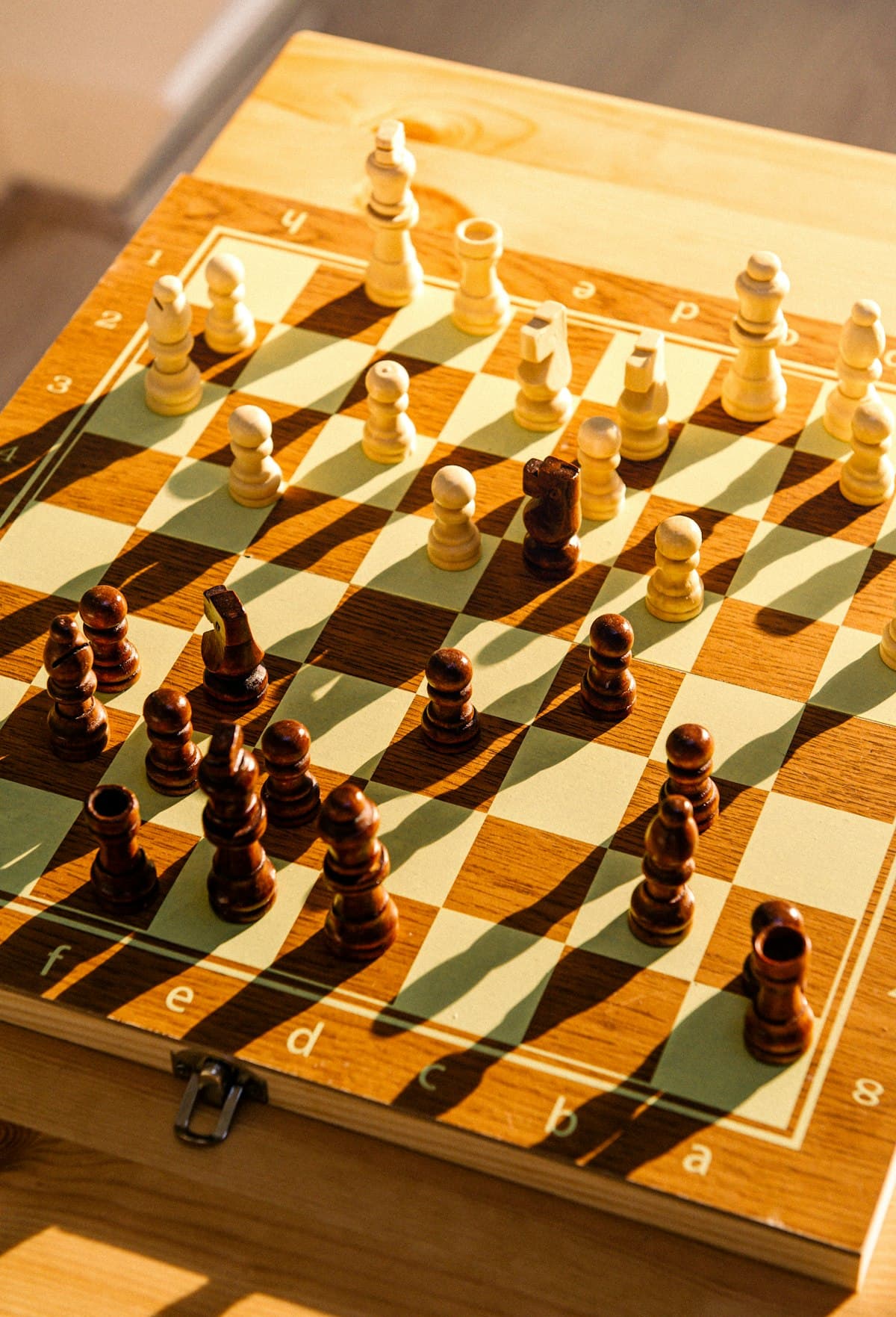
Look at the diagram at the top of this article. A pawn chain is a line of pawns connected diagonally, like d4-e5 for White. The rule is one of the oldest and most reliable in chess strategy: always attack the base of the chain, never its tip. The tip (e5 here) is already well advanced and hard to reach; the base (d4), on the other hand, is defended by no other pawn, and if it falls, the whole chain can collapse.
The pawn majority: push it, or attack against it
Having more pawns than the opponent on one wing of the board is called a majority. The general rule is simple: push your majority, ideally in the endgame, to create a passed pawn. But there's a famous, counter-intuitive exception: the minority attack. The side with fewer pawns on a wing can deliberately push them against the opponent's majority, not to promote, but to force the creation of a lasting weakness on the other side (for example an isolated or backward pawn) after the trades that follow.
Did you know?
Much of this way of thinking about pawn structure comes from the book "My System" by grandmaster Aron Nimzowitsch, published in the 1920s. Considered one of the most influential works in all of chess history, it remains an essential reference for anyone who wants to go further on this topic.
Key takeaways
- ✓Isolated pawn: the opponent blockades it, then trades pieces to exploit it in the endgame
- ✓Backward pawn: attacked directly down its half-open file with the heavy pieces
- ✓Hanging pawns: a double-edged structure, to blockade before it can advance
- ✓Pawn chain: always attack the base, never the tip
- ✓Pawn majority: push it to create a passed pawn, unless a minority attack targets a weakness instead
Check your understanding
What does a pawn structure reveal, according to the article?