Doubled, isolated, and backward pawns: the structural weaknesses to spot
A poorly placed pawn can weigh on an entire game. Here are the three most common pawn structure weaknesses, and why they matter.
Key takeaway
A doubled, isolated, or backward pawn is harder to defend: these weaknesses often outlast the move that created them.
A poorly placed pawn isn't always obvious right away, but it can weigh on an entire game, long after the move that created it. Here are the three most common structural weaknesses, and why they matter.
Doubled pawns
Two pawns of the same color end up on the same file, usually after a capture. They can no longer protect each other the way normal pawns do (diagonally), and the front pawn often blocks the one behind it, which loses all mobility.
Isolated pawns
An isolated pawn has no friendly pawn left on either neighboring file to support it. It can never be defended by another pawn, only by pieces, which ties those pieces down to protecting it instead of letting them act elsewhere on the board.
Backward pawns
A backward pawn has fallen behind its neighbors and can't safely advance (the square in front of it is watched by an enemy pawn). It becomes a fixed target, often sitting on a semi-open file that the opponent can exploit with their rooks.
A concrete example
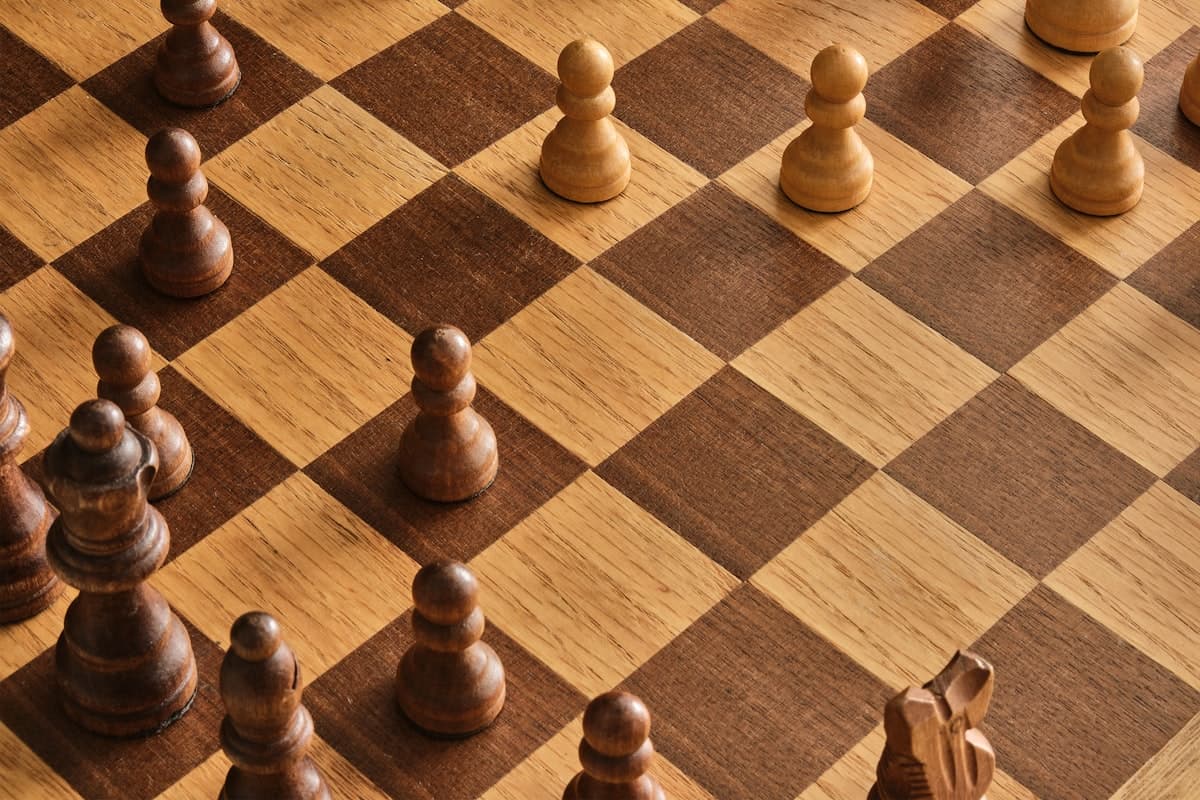
In the diagram above, White's pawns on c2 and c3 are doubled, typically the result of a capture like "bxc3". The c-file stays weak for the rest of the game: a pawn with less practical value, despite equal material on the board.
A weakness isn't always fatal
These structures don't automatically lose the game: they often come with some compensation in return (open files for rooks, strong outposts for pieces). But recognizing these weaknesses in the opponent's camp, or avoiding creating them needlessly in your own, is an essential strategic reflex.
Key takeaways
- ✓Doubled pawns: two pawns on the same file, unable to support each other diagonally
- ✓Isolated pawns: no friendly pawn on either neighboring file to defend them
- ✓Backward pawns: stuck behind their neighbors, fixed targets on a semi-open file
- ✓These weaknesses aren't always fatal, but they deserve to be spotted and weighed
Check your understanding
What do doubled, isolated, and backward pawns have in common?