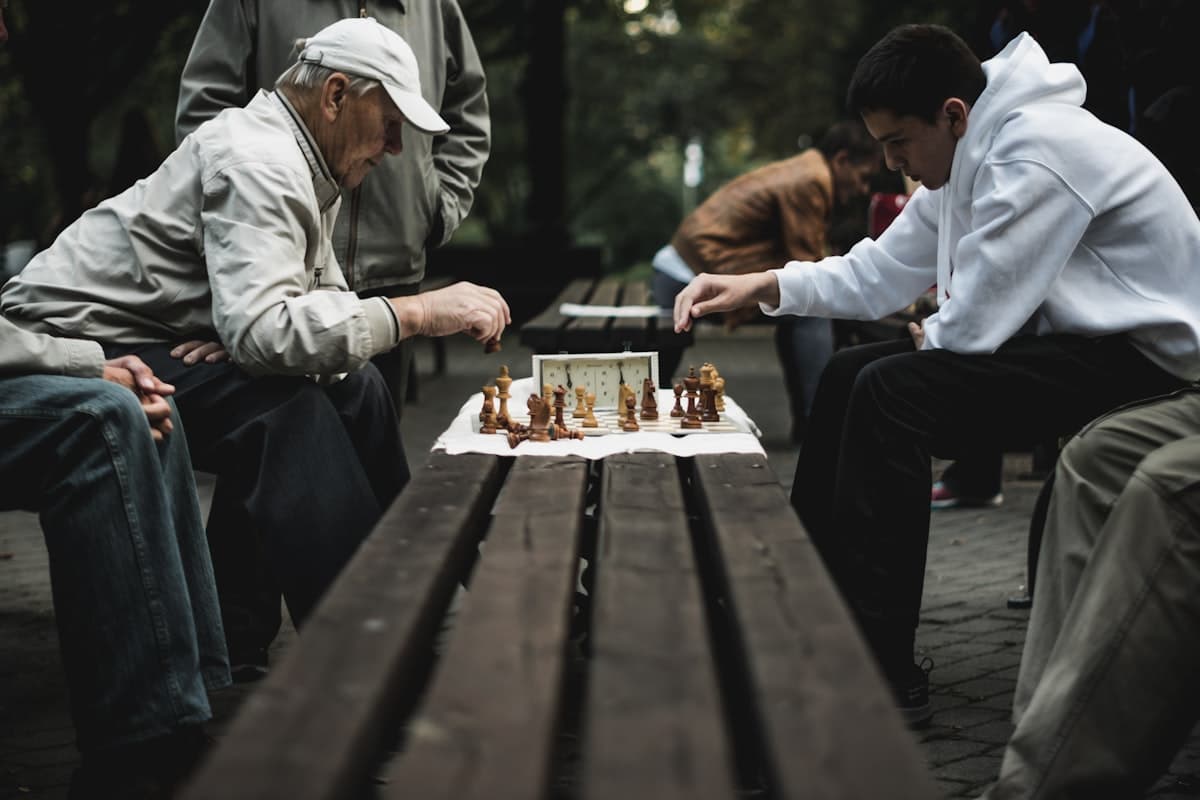
The three phases of a chess game: opening, middlegame, endgame
Every chess game passes through three distinct phases, each with its own priorities. Here's how to recognize them and adapt.
Key takeaway
Priorities change radically depending on the phase of the game: what's a good move in the opening can be pointless in the endgame.
Every chess game, with few exceptions, passes through three distinct phases. Each one has its own priorities, and confusing the reflexes of one phase with another is a frequent source of beginner mistakes.
1. The opening
Roughly the first ten to fifteen moves. Priority goes to the three principles you already know: control the center, develop your minor pieces, get your king to safety by castling. This is a phase where speed and soundness matter more than creativity.
2. The middlegame
Once the pieces are developed, the real fight begins. This is when you apply the Checks/Captures/Threats method on every move, spot structural weaknesses in the opponent's camp (doubled, isolated, backward pawns), and build a coherent plan instead of stringing together isolated moves.
3. The endgame
The number of pieces shrinks, and the king's role changes completely: from a piece to protect, it becomes an active piece, valuable in opposition calculations. Technique matters more than creativity: mating with king and queen, the staircase mate, or simply counting squares with the rule of the square.
Why this distinction matters
An excellent move in one phase can be pointless, even bad, in another. Developing a piece stops making sense once the middlegame is underway. Hunting for a complicated mate has little point while development isn't finished. Recognizing which phase the game is in helps you pick the right priorities, move after move.
Key takeaways
- ✓Opening: center, development, king safety, speed and soundness above all
- ✓Middlegame: tactics (CCT), plans, exploiting the opponent's weaknesses
- ✓Endgame: the king becomes active, technique beats improvisation
- ✓Each phase has its own priorities: a good move in one can be beside the point in another
Check your understanding
Is a good opening move always a good endgame move?