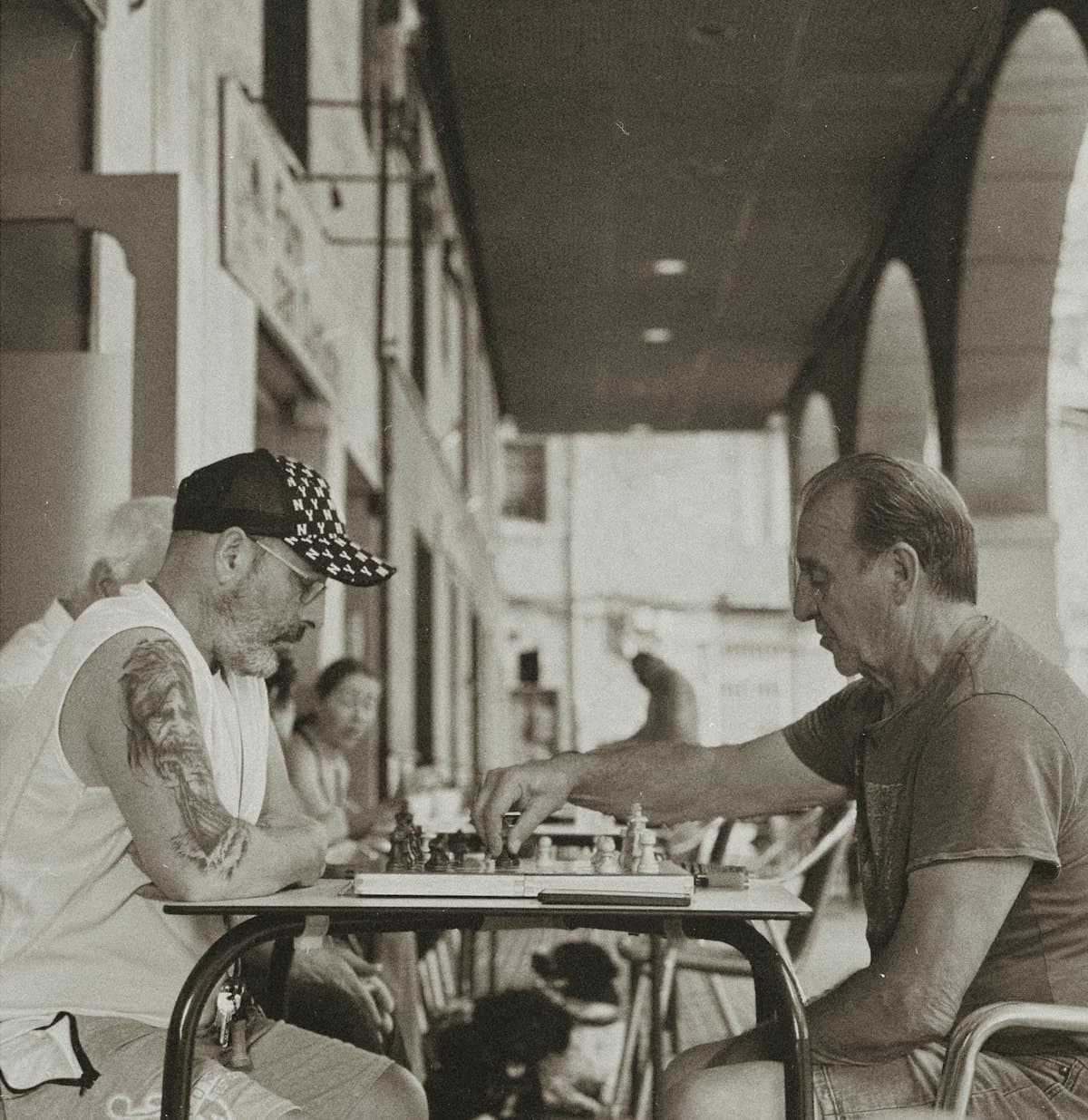
Three opening principles every beginner should know
Control the center, develop your pieces, get your king to safety: the foundation of every solid opening.
Key takeaway
Center, development, king safety: these three reflexes are enough to start most of your games well.
Three reflexes are enough to start most of your games well. Let's take them one at a time, then see them in action.
1. Control the center
The central squares (e4, e5, d4, d5) give your pieces maximum mobility: a piece placed centrally sees and threatens far more squares than one stuck on the edge. Starting with a central pawn push (1.e4 or 1.d4) is almost always a good reflex.
2. Develop your pieces
Bring your knights and bishops out first, to active squares, before launching an offensive. Keep your queen for later, and avoid moving the same piece twice before the others are out. A piece still on its starting square isn't taking part in the game.
3. Get your king to safety
Castling, usually between move five and ten, secures the king and connects your rooks. Delaying it often exposes the king to avoidable attacks, even when the game looks calm.
The early-queen trap
Bringing the queen out too early makes it an easy target for the opponent's minor pieces, which gain time by attacking it repeatedly while the opponent quietly develops. Bring out your knights and bishops first, the queen comes naturally later.
The five-move check
After your first five or six moves, ask yourself: do I have one or two pawns in the center? Are my knights and bishops out? Has my king castled? Three yeses and your opening is probably sound.
Check your understanding
Which of these is NOT one of the three opening principles?