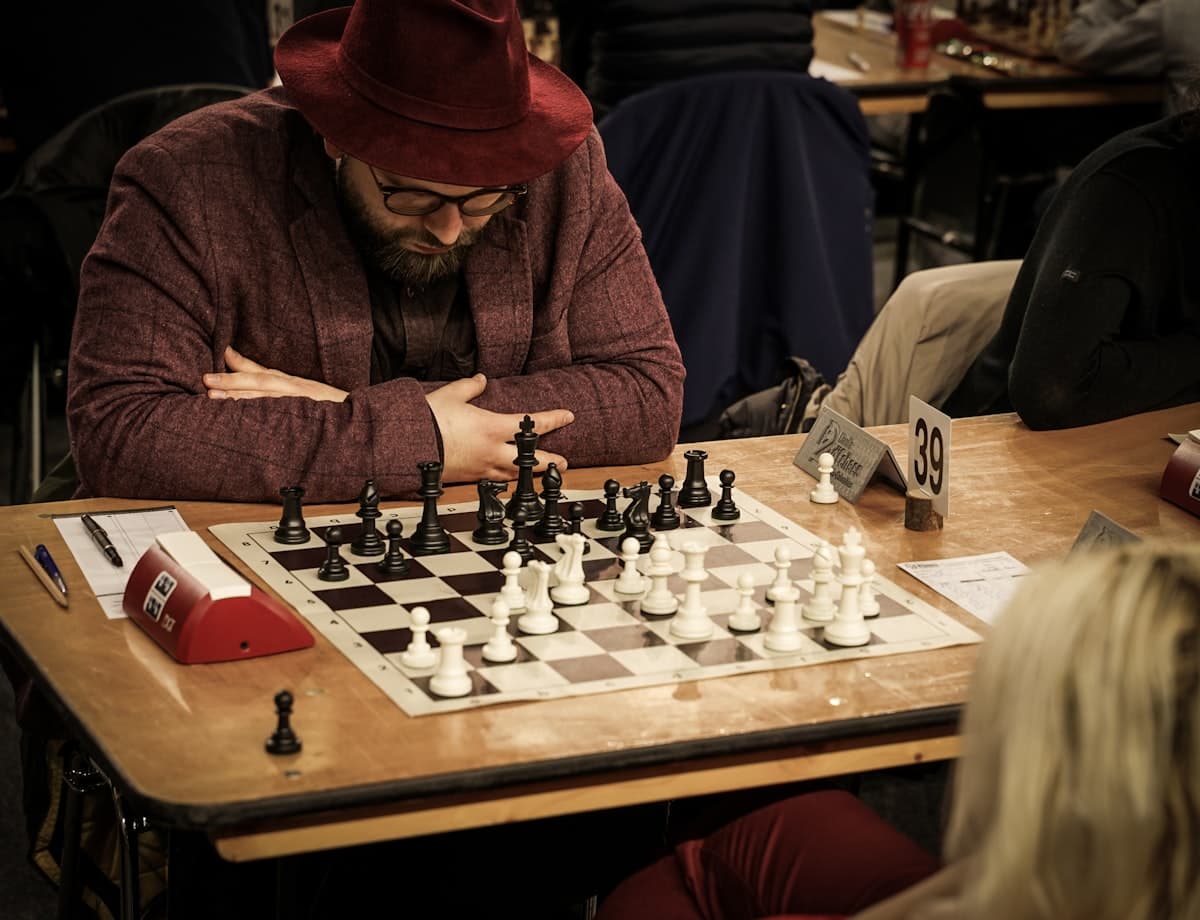
King and pawn versus king: the key squares
The most fundamental endgame of all. A simple principle lets you tell, at a glance, whether the pawn can promote or the draw is guaranteed.
Key takeaway
For a given pawn, there are "key squares": if the king pushing the pawn manages to occupy one, the pawn promotes. Otherwise, it's a draw. The one exception: a rook pawn (a- or h-file) always draws if the defending king reaches the corner in time, regardless of the key squares.
King and pawn versus king is the simplest endgame there is on paper, and yet it's also the most fundamental: every more complex pawn endgame ultimately rests, at some point, on this basic mechanism. Understanding it changes a good deal of how you play endgames.
The key-square concept
For every position of the pawn, there are "key squares": specific squares the attacking king must occupy to guarantee the pawn's promotion, no matter what the opponent does. This ties directly back to the article on opposition: opposition is precisely the tool used to conquer a key square.
Look at the diagram
This mechanism repeats as the pawn advances: the key squares always shift two ranks ahead of it. Once the pawn reaches the 6th rank, for instance, the key squares move closer accordingly, making the attacking king's job easier as the game progresses.
The crucial exception: the rook pawn
There's one fundamental exception worth knowing by heart: a rook pawn (the a-file or h-file) always draws if the defending king reaches the promotion corner (a8, h8, a1, or h1) in time, regardless of the theoretical key squares. The reason is geometric: a lone king, tucked into that corner, can never be dislodged on a single file, for lack of room to maneuver around it. It's the only file where the general key-square rule isn't enough to guarantee a win.
Key takeaways
- ✓Key squares are generally located two ranks ahead of the pawn
- ✓If the attacking king occupies a key square, promotion is guaranteed
- ✓Otherwise, with correct defensive play, the position is a draw
- ✓Crucial exception: a rook pawn stays drawn if the defending king reaches the promotion corner in time, regardless of the key squares
Check your understanding
What is the crucial exception to the key-square rule in king-and-pawn-versus-king endgames?