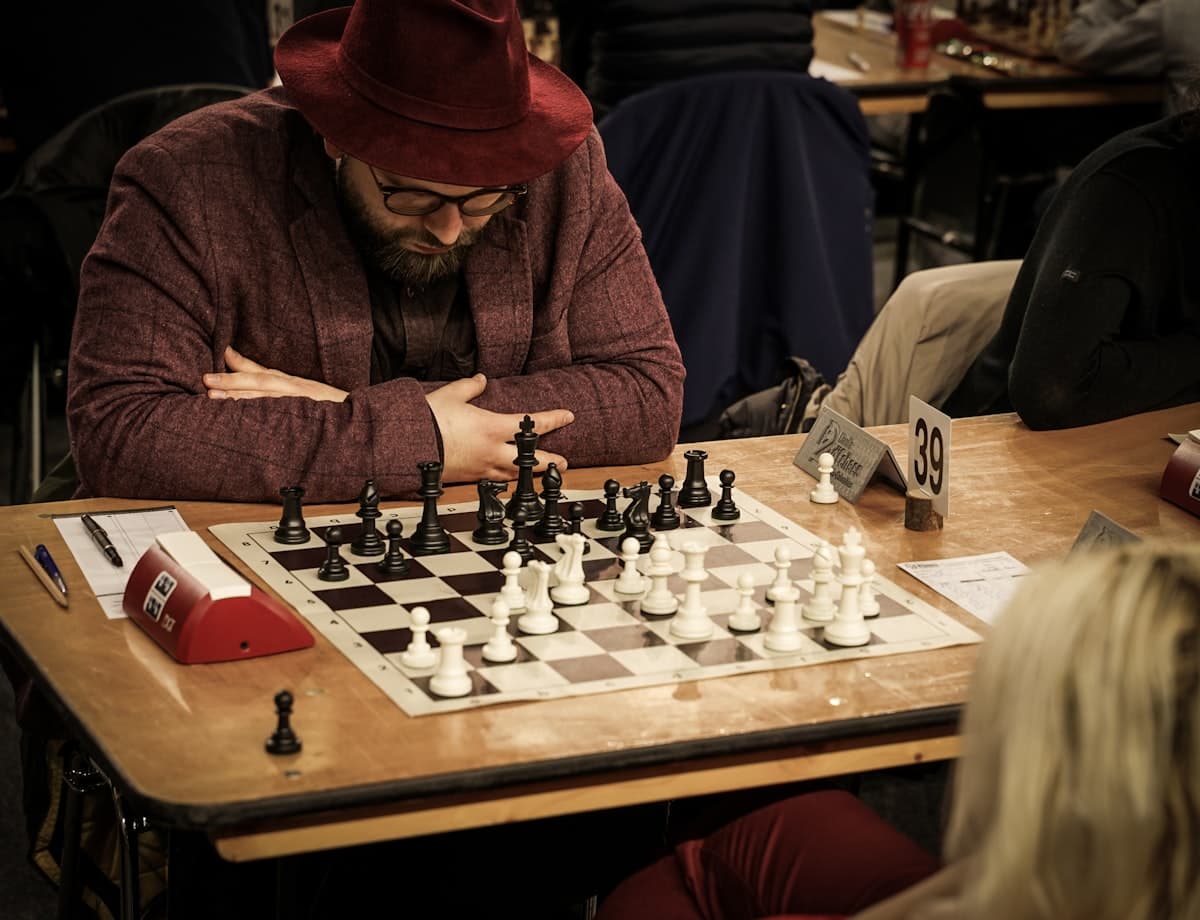
Zugzwang: when having to move becomes a problem
In chess, you always have to move, even when no move helps you. That moment has a strange name borrowed from German: zugzwang.
Key takeaway
In zugzwang, a player would be better off "passing", but since that's forbidden in chess, they must play a move that makes their position worse.
Here's a rule many beginners forget to use to their advantage: in chess, you are never allowed to "pass" your turn. When it's your move, you must move a piece, even if, deep down, you'd rather do nothing at all. Most of the time this isn't a problem. But sometimes it becomes a very serious one: that's what's called zugzwang.
A German word for a universal idea
"Zugzwang" comes from German and literally means "compulsion to move". It describes a position where absolutely every move available to a player makes their situation worse. If they could pass, they'd stay safely where they are. But since they must move, they're forced to weaken their own position, sometimes decisively.
Look at the diagram
In the position above, the white and black kings face each other, separated by one square, with a white pawn right behind. It's Black to move. The black king can't stay on e7 (staying put isn't a legal move) and can't step toward the white king (the two kings can never touch). So it must retreat, either to d7 or to f7. But the moment it steps off the pawn's file, the white king immediately advances and escorts its pawn all the way to promotion. Simply being forced to move dooms Black.
Did you know?
Zugzwang is almost always an endgame phenomenon. The more pieces remain on the board, the more "neutral" moves a player has available (moving a piece without changing anything important), and the less likely zugzwang becomes. This is one of the reasons king-and-pawn endgames demand a different kind of attention from the rest of the game.
What's the point of knowing this?
Recognizing zugzwang sometimes makes it possible to win an endgame that looked perfectly equal, simply by maneuvering so the opponent is the one forced to move at the wrong moment. It's a quiet but remarkably effective tool between players of similar strength.
Key takeaways
- ✓In chess, you can never pass your turn: you must always play a move
- ✓Zugzwang is when every available move makes the position of the player to move worse
- ✓It's a phenomenon almost always tied to endgames, when few pieces remain
- ✓Knowing how to force zugzwang can sometimes win an endgame that looked balanced
Check your understanding
What happens in a zugzwang situation?