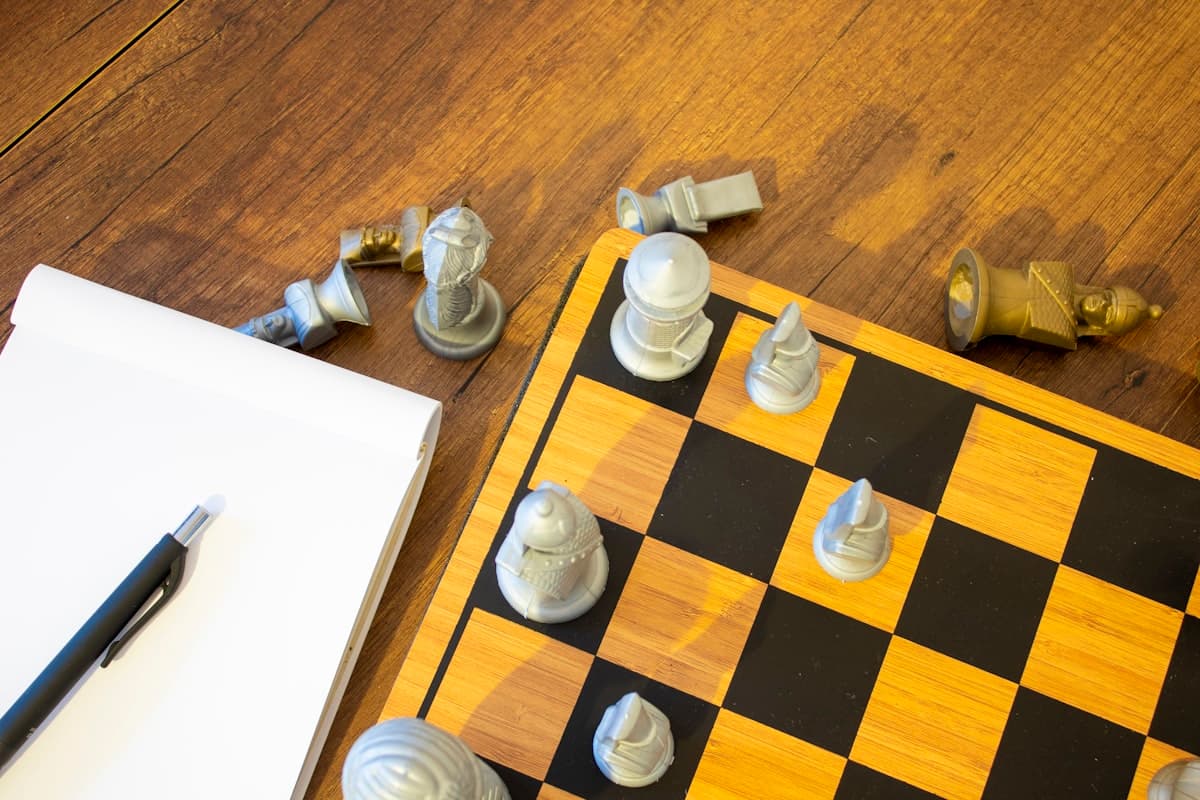
Analyzing your own games: the method for improving after the fact
Winning or losing a game is only half the work: reviewing it afterward is what actually makes you improve. Here's a simple method to get started.
Key takeaway
Reviewing a game without looking for the exact moment everything turned means missing the chance to actually improve.
Playing a lot of games isn't, on its own, enough to improve at chess. What really makes the difference is what you do afterward: reviewing your game with a clear head, without time pressure, to understand what actually worked and what cost you dearly.
Step 1: replay the game without judging
Before hunting for mistakes, simply replay the whole game, move by move, without stopping. This first pass is meant to pick up the thread of the game and put you back in the context of each decision, before starting to question them.
Step 2: spot the critical moments
Not every move in a game carries the same weight: some moments matter far more than others. A critical moment is a point where several very different plans were possible, where a piece was suddenly hanging, or right after a trade that changed the nature of the position. Those are the moments worth slowing down to analyze in detail.
Look at the diagram
Step 3: compare your move to other options
For each critical moment you identify, ask yourself: what did I consider at that point, and what else could I have considered? You don't need an analysis engine for this: simply searching for other candidate moves, even without evaluating them perfectly, builds the most useful habit for real games.
Step 4: take away one lesson, not ten
The classic trap of self-analysis is trying to fix everything at once. It's better to walk away from a game with one clear lesson ("I forgot to check for hanging pieces again before moving") than ten vague notes you'll forget by the very next game.
Did you know?
Many strong players keep a game journal where, after each important game, they write down a single sentence summarizing the main lesson to remember. A simple habit, but remarkably effective over time.
Key takeaways
- ✓Replay the whole game first without judging, to get back into its context
- ✓Spot the critical moments: several possible plans, a hanging piece, a decisive trade
- ✓Compare the move you played to other candidates, even without an analysis engine
- ✓Take away one clear lesson per game rather than ten vague notes
Check your understanding
According to the article, what's the classic pitfall of self-analysis?