RIAChess

The best chess books worth reading

A selection of classics, from the very first book for beginners to reference works for stronger players, with what each one actually gives you.

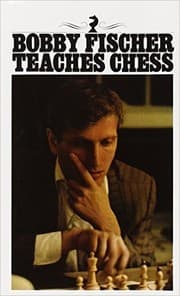
Bobby Fischer Teaches Chess

Bobby Fischer Teaches Chess

by Bobby Fischer, Stuart Margulies, Donn Mosenfelder · 1966

Beginner

A book built as a sequence of programmed-learning exercises: each page poses a question about mates and basic tactics, with the answer on the next page.

Why read it : No prior knowledge required. Probably the best book in the world for learning to spot one-move mates.

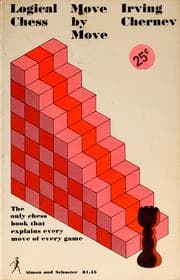
Logical Chess: Move by Move

Logical Chess: Move by Move

by Irving Chernev · 1957

Beginner

33 master games annotated move by move, explaining in plain language why each move is played.

Why read it : The book that teaches you to "think through" a whole game instead of memorizing isolated moves. A classic bridge from beginner to intermediate.
Chess Fundamentals

Chess Fundamentals

by José Raúl Capablanca · 1921

Beginner

Written by a World Champion, this book lays out the basics of the endgame and essential strategic principles with rare clarity.

Why read it : A century later, its explanations of elementary endgames remain among the clearest ever written.

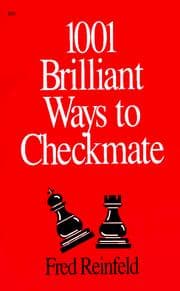
1001 Brilliant Ways to Checkmate

1001 Brilliant Ways to Checkmate

by Fred Reinfeld · 1955

Beginner

A collection of 1001 tactical mating puzzles, from the simple to the tricky, ordered so you can progress at your own pace.

Why read it : Repeated mating-pattern drills are one of the fastest ways to improve your tactics.

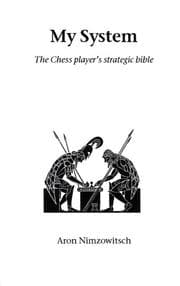
My System

My System

by Aron Nimzowitsch · 1925

Intermediate

A strategy treatise that introduced concepts that are now standard vocabulary: overprotection, the blockade, the open file, prophylaxis.

Why read it : A demanding but foundational read: much of modern strategic vocabulary comes directly from this book.

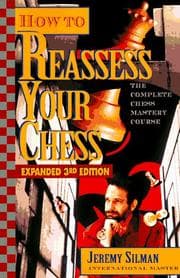
How to Reassess Your Chess

How to Reassess Your Chess

by Jeremy Silman · 1993

Intermediate

A method for evaluating a position through its "imbalances" (pawn structure, the bishop pair, space advantage...) rather than pure calculation.

Why read it : Ideal for players who know the rules but don't know what to do once the opening is over.

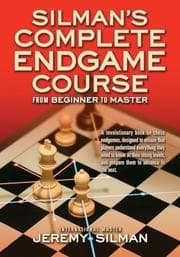
Silman's Complete Endgame Course

Silman's Complete Endgame Course

by Jeremy Silman · 2007

Beginner

An endgame course organized by Elo rating band: each chapter tells you exactly which endgames to learn at your current strength.

Why read it : A unique structure that avoids learning endgames that are too advanced too soon, or getting stuck re-learning basics you already know.

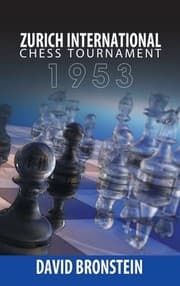
Zurich International Chess Tournament 1953

Zurich International Chess Tournament 1953

by David Bronstein · 1956

Advanced

All 210 games of the 1953 Candidates Tournament, deeply annotated by one of the participants, David Bronstein.

Why read it : Widely regarded by strong players as one of the best annotated game collections ever written.